Many shops compare these two machines only after panel cutting starts slowing the rest of production. At that point, the real issue is usually not whether both saws can produce straight, accurate cuts. It is whether the cutting method fits the shop’s floor plan, job mix, labor model, and downstream workflow.
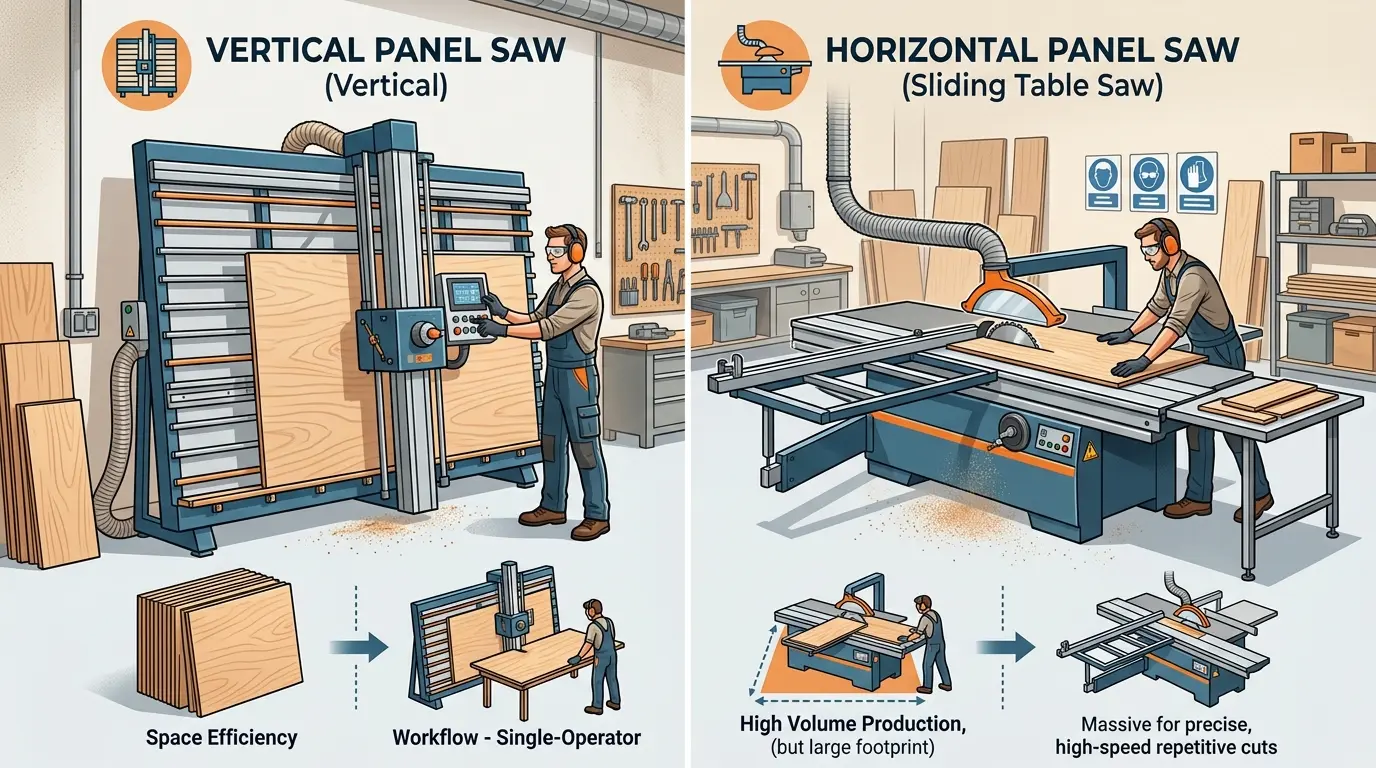
A vertical panel saw is commonly chosen when space efficiency and day-to-day flexibility matter most. A horizontal panel saw is more commonly chosen when repeated rectangular panel cutting has to support higher throughput and a more structured production flow. Both can be the right choice. They simply solve different production constraints.
Start With the Constraint, Not the Machine Name
Before comparing features, define what is actually creating friction in the shop:
- Is Floor Space Too Tight For A Larger Dedicated Cutting Area?
- Is Repeated Panel Sizing Slowing Edge Banding, Drilling, Or Assembly?
- Does The Shop Run Mostly Short Custom Jobs Or Repeated Batch Orders?
- Is Operator Handling Still Central To The Process, Or Does The Team Need More Systemized Flow?
- Is The Real Need Straight Panel Sizing, Or A Broader Front-End Process That Includes Routing Or Drilling?
Once the bottleneck is clear, the saw choice becomes much easier. Without that clarity, shops often compare isolated machine features instead of comparing workflow fit.
Vertical Panel Saw: Main Advantages And Tradeoffs
A vertical panel saw is commonly valued because it keeps full-sheet cutting practical without requiring the same footprint as a horizontal layout. That matters in smaller cabinet shops, custom furniture workshops, mixed-use production areas, and interior fit-out operations where every meter of floor space has to stay productive.
The strongest advantages are usually tied to layout efficiency and flexible daily use rather than pure cutting volume.
Pros
- Compact Upright Layout That Uses Floor Space More Efficiently
- Practical Full-Sheet Processing In Tighter Workshops
- Strong Fit For Short Runs, One-Off Jobs, And Mixed Daily Work
- Direct Operator Visibility And Control During Positioning And Cutting
- Easier To Integrate Into Shops That Cannot Dedicate A Large Area To One Cutting Cell
Cons
- Usually Less Suited To Sustained High-Volume Batch Cutting
- Output Still Depends More Heavily On Consistent Operator Handling
- Less Effective When Downstream Operations Need A Steady Flow Of Repeated Rectangular Parts
- Can Become A Constraint When The Shop Starts Standardizing Larger Production Runs
- Large-Sheet Handling Still Requires Good Operator Discipline Even If The Footprint Is Smaller
In practical terms, a vertical panel saw helps keep sheet processing accurate and manageable when the shop needs flexibility and space efficiency more than line-style throughput.
Horizontal Panel Saw: Main Advantages And Tradeoffs
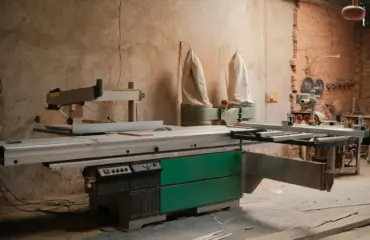
A horizontal panel saw is more often associated with beam-saw-style production logic: repeated panel sizing, structured cut lists, and smoother front-end flow into downstream processes. That is why many buyers reviewing industrial panel saws are really evaluating whether a more systemized horizontal cutting process fits their production model.
Its main strength is not just speed. It is production stability. When a shop cuts a large number of rectangular cabinet, wardrobe, shelving, or office-furniture parts, the horizontal format often supports a more repeatable workflow.
Pros
- Stronger Fit For Repeated Batch Processing Of Rectangular Panel Parts
- Better Support For Structured Cut Lists And More Predictable Daily Output
- Helps Stabilize Material Flow Into Edge Banding, Drilling, And Assembly
- Reduces Dependence On Operator Technique For Every Individual Cut
- Often Easier To Scale When The Shop Is Moving Toward Higher-Volume Panel Processing
Cons
- Requires More Dedicated Floor Space
- Usually Makes More Sense In Shops With A More Standardized Production Rhythm
- Can Be More Machine Than A Smaller Custom Shop Fully Uses
- Less Naturally Matched To Frequent Job Changes And Highly Varied Short Runs
- May Not Be The Best First Upgrade If The Real Bottleneck Is Not Straight Panel Sizing
In other words, a horizontal panel saw usually earns its value when the goal is to turn panel cutting into a more repeatable manufacturing step rather than a flexible manual workstation.
Side-By-Side Comparison
| Decision Factor | Vertical Panel Saw | Horizontal Panel Saw |
|---|---|---|
| Best Fit | Space-constrained shops with varied daily work | Repeated batch panel sizing with structured flow |
| Floor Space | More efficient upright footprint | Larger dedicated cutting area |
| Throughput Focus | Moderate output with flexible handling | Stronger for higher-volume repeat work |
| Operator Role | More direct involvement in sheet positioning and cut execution | More focused on setup, loading, and process flow |
| Job Change Pattern | Better for frequent short-run changes | Better for stable, repeated cutting programs |
| Downstream Impact | Works well when downstream flow is lighter or less standardized | Better for feeding a more disciplined production line |
| Growth Path | Good when flexibility remains the priority | Better when the shop is scaling repeatable panel production |
The key point is that these machines are not simple substitutes. A vertical panel saw usually protects flexibility and space efficiency. A horizontal panel saw usually protects throughput and repeatability.
When A Vertical Panel Saw Usually Makes More Sense
A vertical panel saw is often the better choice when the shop still needs accurate full-sheet cutting, but layout efficiency and job flexibility matter more than maximum output.
That is commonly true when:
- Floor Space Is Limited.
- The Shop Runs Many Short Batches Or Custom Orders.
- The Cutting Area Must Share Space With Other Operations.
- Direct Operator Control Still Adds Practical Value.
- The Business Needs A Flexible Panel-Cutting Solution More Than A Production-Line Cutting Cell.
For smaller and mid-sized workshops, that balance can be more valuable than installing a larger horizontal system too early.
When A Horizontal Panel Saw Usually Makes More Sense
A horizontal panel saw is often the better choice when rectangular panel cutting has become a production bottleneck and the business needs more stable front-end flow.
That is commonly true when:
- Repeated Cabinet Or Furniture Parts Make Up Most Daily Output.
- Cutting Delays Are Slowing Edge Banding, Drilling, Or Assembly.
- Management Wants Less Variation Between Operators Or Shifts.
- The Shop Relies On Repeatable Cutting Programs Rather Than Constant Job Changes.
- The Factory Is Building Toward A More Standardized Panel-Processing Line.
In that situation, the saw is not just improving cut quality. It is improving how predictably the whole line runs.
One Alternative Buyers Sometimes Miss
Some shops frame the decision as vertical versus horizontal when the real question is whether they should stay with saw-based panel sizing at all. If the workflow also depends on shaped parts, routing, drilling integration, or stronger material-utilization logic, it may be worth comparing CNC nesting machines instead of forcing every problem into a saw-only comparison.
That does not make a panel saw the wrong tool. It simply means the best equipment decision depends on the actual process requirement, not the most familiar machine category.
Practical Summary
Choose a vertical panel saw when the shop needs accurate full-sheet cutting in a compact footprint and the daily work stays varied enough that flexibility matters more than pure throughput. Choose a horizontal panel saw when repeated panel sizing needs to become faster, more repeatable, and easier to integrate into a structured production flow.
The better machine is not the one with the broader reputation. It is the one that removes the real source of friction in the shop. If that friction is limited space and changing job requirements, a vertical panel saw often fits better. If that friction is unstable output in repeated batch cutting, a horizontal panel saw is usually the stronger choice.