When the cutting station becomes a daily source of delays, the first assumption is often that the shop needs more speed. In many woodworking factories, that is only part of the problem. The real constraint is often that the work mix changes too often for a more rigid cutting setup to stay efficient.
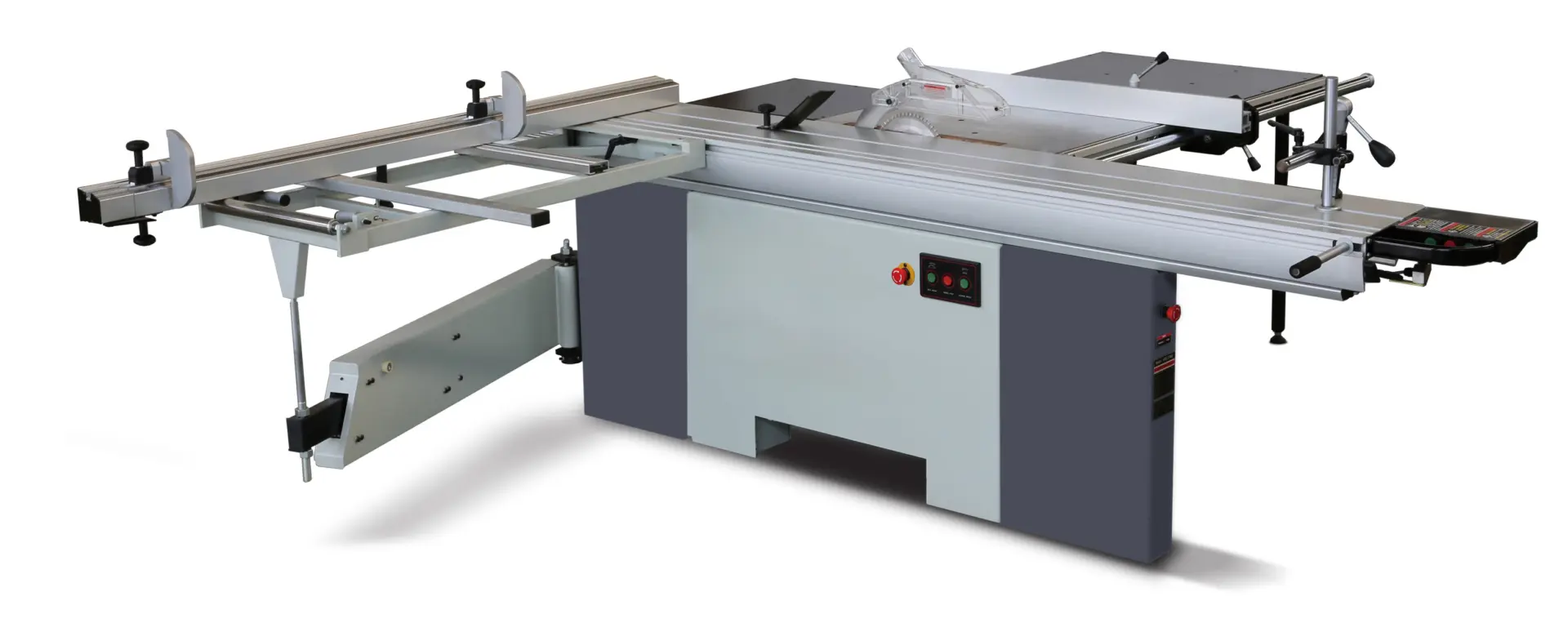
That is where a sliding table saw can become the stronger choice. It is commonly used in production environments that need accurate straight cutting, operator control, and cleaner transitions between different job types without turning every changeover into a bottleneck.
The key point is this: a sliding table saw does not outperform other cutting solutions because it is universally faster or more automated. It outperforms them when the workflow rewards flexibility, cut control, and rapid adaptation more than pure batch volume.
Outperform Means Better Workflow Fit, Not Higher Theoretical Capacity
The word “outperform” can be misleading if it is only measured in sheets per hour or parts per shift. On the shop floor, the better machine is usually the one that removes the most friction from the actual production process.
In a custom or mixed-production environment, that friction often comes from:
- Frequent job changes
- Mixed sheet goods and solid-wood components
- Short production runs
- Manual adjustments to suit drawings or site conditions
- The need to make clean angle cuts or controlled crosscuts without moving work to another station
In those conditions, a sliding table saw can help more than a higher-throughput solution that performs best only when the cutting pattern stays repetitive and standardized.
Where Sliding Table Saws Usually Create A Clear Advantage
A sliding table saw is commonly the stronger fit when the work is varied enough that operator-led control creates better overall efficiency than a more specialized cutting line.
That advantage usually shows up in a few specific ways.
First, job changeovers are often easier to manage. When orders shift from cabinet panels to custom furniture parts to solid-wood trimming, the cutting process can adapt without forcing the shop into a rigid batch structure.
Second, the machine is often well suited to shops where the operator still plays an important role in part sequencing and cut decisions. In many real production settings, drawings change, dimensions need to be confirmed, and priorities shift during the day. A sliding table saw usually handles that kind of variability better than a system designed mainly for repetitive runs.
Third, it can support a wider range of straight cutting tasks from one station. That matters in factories where floor space, staffing, or budget do not justify several dedicated cutting systems.
The result is not just flexibility in a general sense. It often means:
- Less disruption when the production schedule changes
- Better control over custom and short-run work
- Cleaner handling of mixed material workflows
- Easier adjustment when one part family does not resemble the next
- Reduced pressure to standardize jobs before the shop is ready to do so
When Sliding Table Saws Outperform Panel Saws
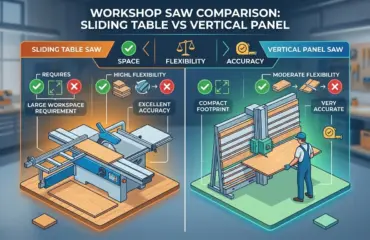
Shops comparing a sliding table saw with panel saws usually get the best answer by looking at job structure, not just machine category.
Panel saws are commonly chosen for repeated rectangular sheet processing, especially where cabinet parts, wardrobe panels, or modular furniture components move through the line in steady batches. They usually create more value when the goal is to stabilize the front end of a high-volume panel workflow.
A sliding table saw tends to be the better fit when that level of standardization does not yet describe the factory. It often outperforms a panel saw when:
- The order mix changes constantly from one project to the next.
- Operators need to switch between panel sizing and more varied straight-cut work.
- Short runs matter more than sustained batch output.
- Cut sequencing depends on operator judgment rather than a highly structured list-driven flow.
- The shop needs one cutting station to cover broader daily demands.
In those conditions, the panel saw’s main strength, which is repeatable batch panel sizing, may not solve the actual production problem. If the factory is not bottlenecked by repeated rectangular sheet processing, then extra throughput alone may not improve the flow enough to justify the tradeoff in flexibility.
When Sliding Table Saws Outperform CNC Nesting Setups
Compared with CNC nesting machines, a sliding table saw is usually stronger in a different type of production logic.
CNC nesting systems are commonly selected when the factory wants to combine routing, drilling, and cutting in a more integrated workflow, especially for panel furniture with shaped parts, machining steps, or higher automation goals. They are often a strong fit when the production model is already ready for programming discipline, material-handling coordination, and a more structured digital process.
A sliding table saw can outperform that kind of setup when the shop needs direct, low-friction cutting capability rather than a broader automated cell. That is often the case when:
- Most parts still depend on straightforward straight cutting rather than routed shapes
- Programming and nesting preparation would add more delay than value for the current job mix
- Operators need to respond quickly to custom dimensions or last-minute revisions
- The factory is not yet organized around a fully integrated nesting workflow
- Management wants a practical cutting upgrade without adding system complexity too early
This does not make a sliding table saw “better” than nesting technology in general. It simply means the sliding table saw may deliver more useful operational value when the real need is flexible cutting throughput rather than process integration.
Decision Table For Real Production Conditions
| Workflow Condition | Sliding Table Saw | Panel Saw | CNC Nesting Machine |
|---|---|---|---|
| Frequent short runs and custom orders | Usually the stronger fit because changeovers and operator-led decisions stay manageable | Often less efficient if the work is not repetitive enough | May add unnecessary programming overhead for simple straight-cut work |
| Repeated rectangular panel batches | Can still work, but usually becomes less efficient as volume rises | Commonly the strongest fit for steady batch panel sizing | May fit if machining integration is also required |
| Mixed sheet goods and solid-wood cutting | Commonly a strong fit because one station can cover more daily variation | Usually better when the work stays primarily sheet-based | Better when the material plan and machining process are already digitized |
| Need for quick adjustments during production | Usually stronger because the operator can adapt cut flow directly | Better when changes are limited and production is highly structured | Better when changes are planned upstream and processed digitally |
| Need for routed shapes, drilling, and nested parts | Not the main strength | Not the main strength | Usually the stronger fit when integrated processing matters |
| Need to simplify the investment path | Often a practical step when the factory needs more capability without full automation | Stronger when the main gap is batch panel throughput | Stronger when the factory is ready for a more integrated automated cell |
The table makes one thing clear: sliding table saws tend to outperform other cutting solutions when adaptability is the real requirement. Once production shifts toward highly repetitive sheet cutting or integrated machining, another solution often becomes the better fit.
The Strongest Use Cases Are Usually Operational, Not Spec-Driven
Many equipment decisions get framed around machine features. In practice, the strongest argument for a sliding table saw is often the way it affects the workflow around the cut.
In the right environment, it helps the shop:
- Keep varied work moving without overcomplicating the cut cell
- Reduce dependence on several separate straight-cut stations
- Maintain cleaner cut control on custom or detail-sensitive work
- Protect schedule flexibility when projects do not repeat cleanly
- Support growth without forcing immediate adoption of a fully automated cutting model
That is especially relevant for custom furniture production, project-based joinery, mixed cabinet work, interior fit-out shops, and factories that are growing but still balancing standard work with bespoke jobs.
Where Sliding Table Saws Usually Stop Being The Best Choice
The tradeoffs matter. A sliding table saw is not usually the strongest answer for every production model.
It often stops being the better fit when:
- Most daily output consists of repeated rectangular panels.
- The main bottleneck is sustained front-end sheet throughput.
- Downstream processes depend on highly standardized batches.
- The factory is ready to combine cutting with routing, drilling, or automated material handling.
- Management is trying to reduce operator dependence as much as possible.
In those situations, a panel saw or CNC nesting workflow may create more repeatable results across the full line. The honest decision is not about which machine category sounds more capable. It is about which one solves the dominant production constraint with the fewest side effects.
Questions To Ask Before Choosing
Before buying, it helps to pressure-test the workflow with a few practical questions:
- Are we cutting repeated batches, or are we constantly switching between different job types?
- Does the shop lose more time to slow throughput, or to changeovers and variability?
- How often do operators need to make judgment calls during the cutting process?
- Are routed shapes and integrated machining central to the work, or is straight cutting still the main requirement?
- Is the business trying to standardize aggressively now, or preserve flexibility while it grows?
Those questions usually point more clearly to the right equipment path than feature lists by themselves.
Practical Summary
Sliding table saws outperform other cutting solutions when the production environment depends on flexibility, operator control, and quick adaptation across changing work. They are commonly the better fit in shops handling short runs, mixed materials, custom furniture parts, and straight-cut tasks that do not justify a more rigid or highly automated system.
They do not outperform every alternative in every condition. When the factory is built around repeated rectangular panel batches, panel saws usually create more value. When integrated routing, drilling, and digital nesting are central to the workflow, a CNC nesting machine is often the stronger choice.
The best result comes from matching the saw to the way work actually moves through the factory. If the shop’s real constraint is changing job demands rather than pure volume, a sliding table saw is often the cutting solution that fits the workflow more naturally.