Many buyers start with what sounds like a simple question: is a panel saw different from a beam saw, or are they basically the same machine? That confusion matters because the answer affects how you compare equipment, interpret supplier listings, and decide whether you are buying a broad machine category or a specific production format.
The short version is this: in industrial woodworking, a beam saw is usually a type of panel saw. But in day-to-day buying conversations, the two terms are often used as if they mean the same thing. The real difference is less about whether both machines can cut panels and more about how the machine is built, how it holds material, and what kind of production flow it is designed to support.
Why The Terms Get Confusing
“Panel saw” is often used as the broader label for machinery that sizes sheet material such as MDF, plywood, particleboard, melamine-faced board, and similar panels. “Beam saw” usually points to a more specific production-oriented design used for repeated, accurate panel cutting in furniture and cabinet manufacturing.
That is why two suppliers can describe a similar machine in different ways. One may list it as a panel saw because that is the machine category. Another may call it a beam saw because the machine uses a beam-based clamping and cutting structure associated with automated batch production.
For buyers, this creates a terminology problem more than a process problem. Both terms live in the same decision space, but they do not always operate at the same level of specificity.
The Short Answer: A Beam Saw Is Usually A Type Of Panel Saw
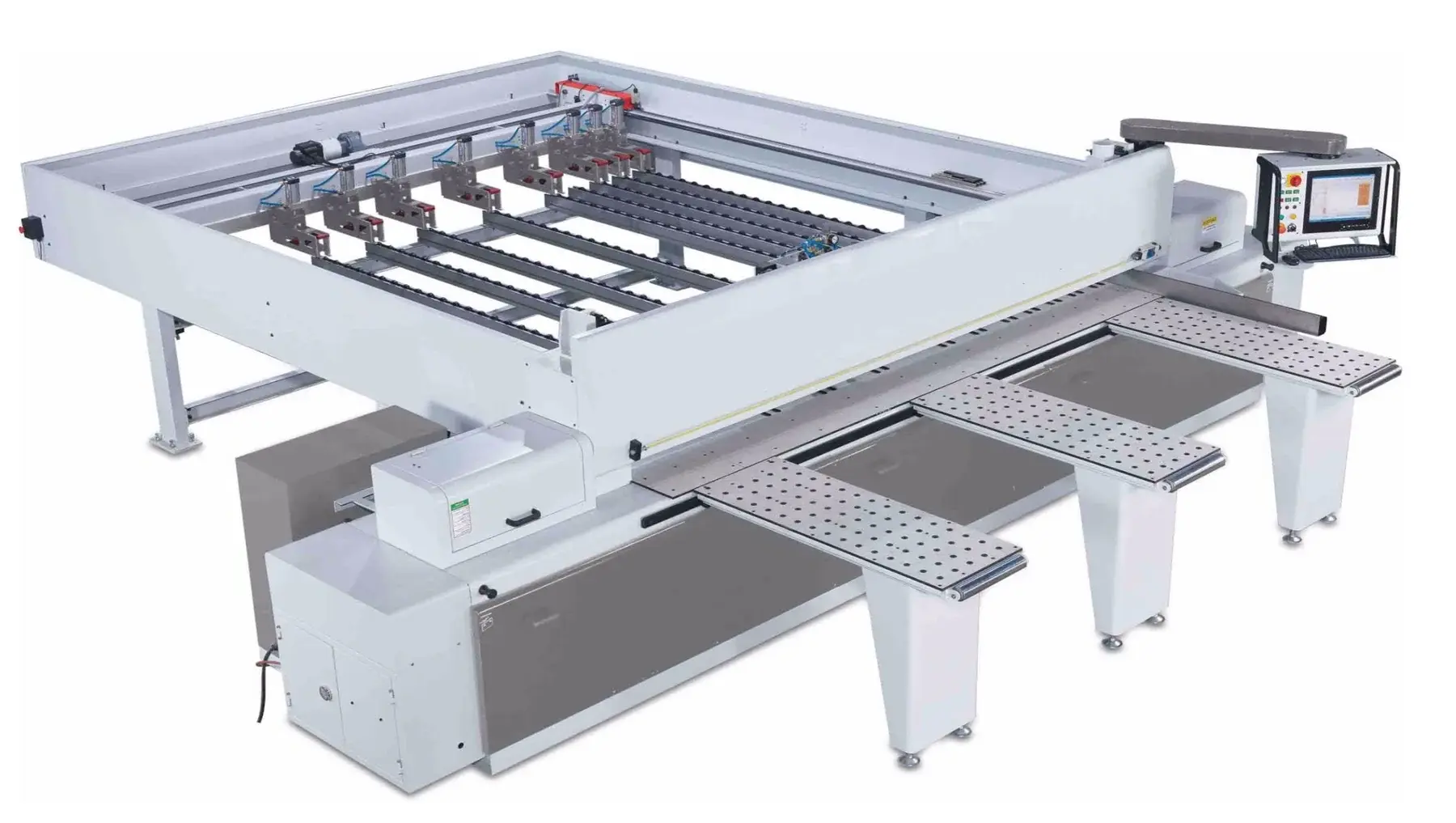
In most factory settings, a beam saw sits inside the broader panel-saw category. It is commonly used where the main job is high-volume panel sizing with stable repeatability, organized cutting sequences, and smoother handoff into downstream steps such as edge banding, drilling, and assembly.
So if you are looking at industrial panel saws for cabinet or furniture production, there is a good chance the practical machine under discussion is beam-saw style equipment rather than a more flexible, operator-led cutting setup.
What Makes A Beam Saw Different In Practice
The practical distinction is usually about machine architecture and workflow intent.
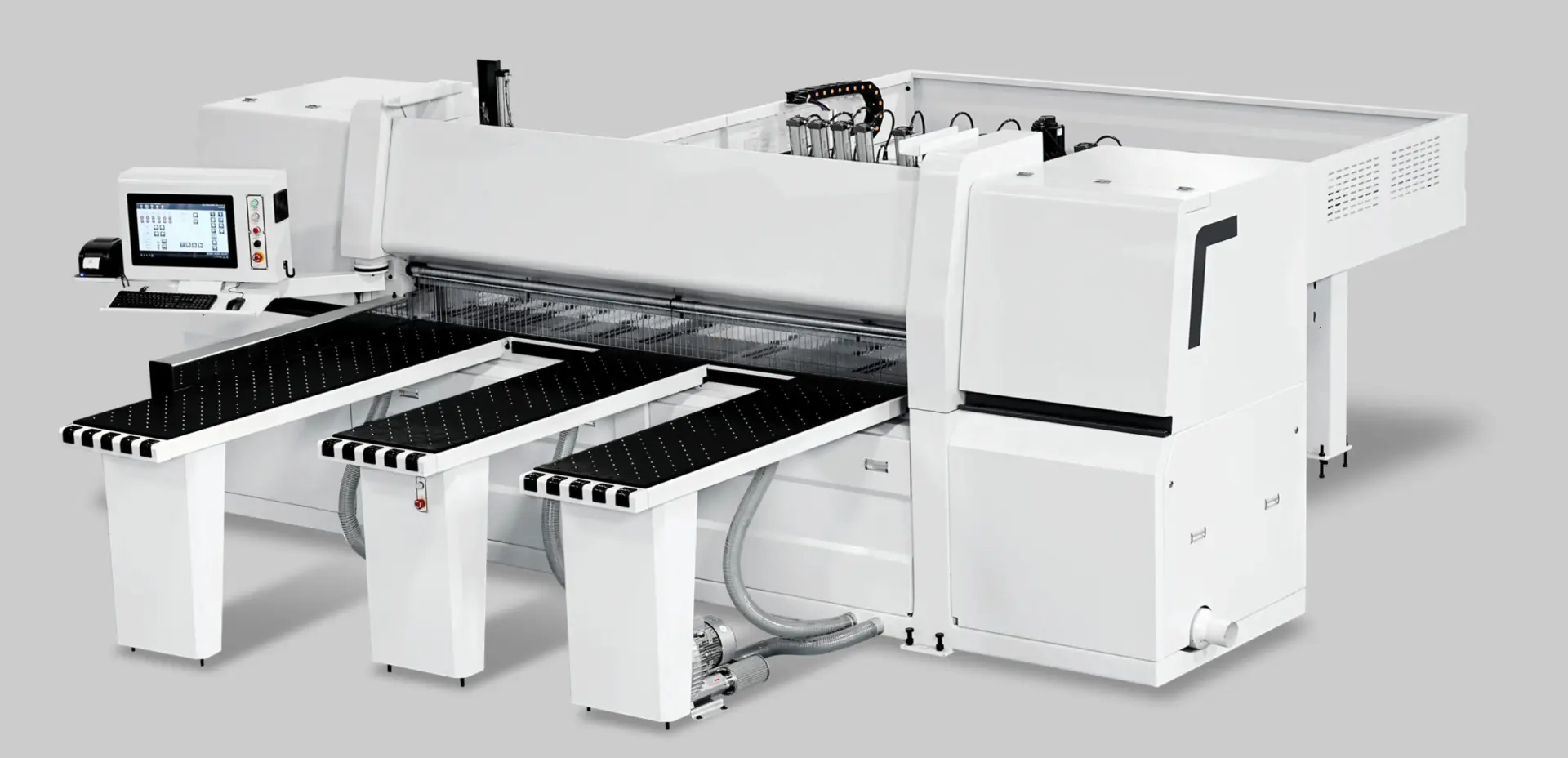
A beam saw is generally associated with:
- Automated or semi-automated panel sizing workflows
- Material clamping that helps keep cuts stable and repeatable
- Strong fit for batch production of rectangular parts
- Higher emphasis on throughput and production consistency
- Less dependence on operator technique during each cut
By contrast, when people use “panel saw” in a looser sense, they may simply mean any machine intended to cut panel materials accurately and efficiently. In that broader usage, the term does not always tell you how automated the machine is, how material is handled, or whether it is best suited to high-volume production.
That is why the smarter question is not “panel saw or beam saw?” in the abstract. It is “am I talking about a category label, or am I talking about a specific production design?”
Panel Saw vs. Beam Saw Comparison Table
| Point Of Comparison | Panel Saw | Beam Saw |
|---|---|---|
| How The Term Is Usually Used | Broad category term for panel-sizing machines | More specific term for a production-oriented panel saw design |
| What Buyers Often Mean | A machine for cutting sheet goods into parts | An automated or higher-throughput machine for repeated panel cutting |
| Workflow Fit | Can describe several panel-cutting formats depending on supplier usage | Usually fits structured batch production more clearly |
| Production Emphasis | Depends on the exact machine being referenced | Throughput, repeatability, and consistent part flow |
| Terminology Risk | Can be too broad to clarify machine format on its own | Usually tells you more about production intent, but still needs verification |
The table shows why the terms overlap so often. Beam saw is usually the narrower and more descriptive term, while panel saw can function as either a broad category or a shorthand label for the same type of industrial machine.
When The Difference Actually Matters To A Buyer
Sometimes the terminology difference does not change the buying outcome at all. If a supplier clearly shows a high-throughput industrial machine for sizing stacked or repeated panels, the equipment may fit your workflow whether the page calls it a panel saw or a beam saw.
The distinction matters more when you are comparing different cutting strategies across the factory. For example:
- If your main goal is stable, repeated panel sizing for cabinet production, beam-saw style equipment is often the clearer fit.
- If your jobs are mixed, custom, or more operator-driven, sliding table saws may remain the more practical comparison point.
- If your production depends on nested shapes, routing, and drilling integration, CNC nesting machines may solve a different problem entirely.
In other words, the naming issue matters most when it hides a bigger workflow question. A buyer who focuses only on the label can miss the more important issue of how the cut cell supports the rest of production.
Beam Saw Strengths In Furniture And Cabinet Production
Beam saws are commonly favored when the shop needs the front end of production to behave in a more controlled, repeatable way. That usually means repeated cabinet sides, shelves, doors, bottoms, tops, wardrobe parts, or other rectangular panels that must arrive downstream with consistent dimensions.
In that environment, the value is not just faster cutting. The stronger benefit is often process stability, including:
- More predictable part sizing from batch to batch
- Cleaner flow into edge processing and drilling
- Less operator-to-operator variation
- Reduced re-cuts caused by inconsistent dimensions
- Better support for scaling output without relying on manual correction
This is why many factories treat the beam saw as a production system choice, not just a saw choice.
When “Panel Saw” May Mean Something Broader Than You Need
If a listing only says “panel saw,” do not assume you already understand the machine. Clarify the actual format, the handling method, the intended production volume, and whether the machine is positioned for flexible custom work or structured batch cutting.
That clarification helps prevent two common mistakes:
- Comparing a broad category term with a specific machine type as though they were true opposites
- Buying a machine based on familiar vocabulary instead of actual workflow fit
The safest approach is to treat panel saw as the umbrella term until the machine design is clear. Once the configuration and production role are clear, you can judge whether the equipment is really the beam-saw type of solution your line needs.
Practical Summary
Panel saw and beam saw are related terms, not always competing terms. In most industrial woodworking discussions, a beam saw is a specific kind of panel saw built for higher-throughput, repeatable panel sizing. That is why the two names are often used almost interchangeably in cabinet and furniture manufacturing.
For buyers, the important distinction is not the vocabulary by itself. It is whether the machine supports the production model you actually run. If the priority is repeated rectangular panel cutting with stable throughput and strong repeatability, beam-saw style equipment is often the clearer fit. If the work is more flexible, custom, or multi-process, the better comparison may not be beam saw versus panel saw at all, but a different cutting approach altogether.