Most furniture factories do not feel this decision first in purchasing. They feel it later, when exposed edges still need manual correction, when a premium-looking wardrobe line does not look as refined as expected after trimming and polishing, or when a factory wants a stronger material-positioning story without creating a new process problem at the edgebander.
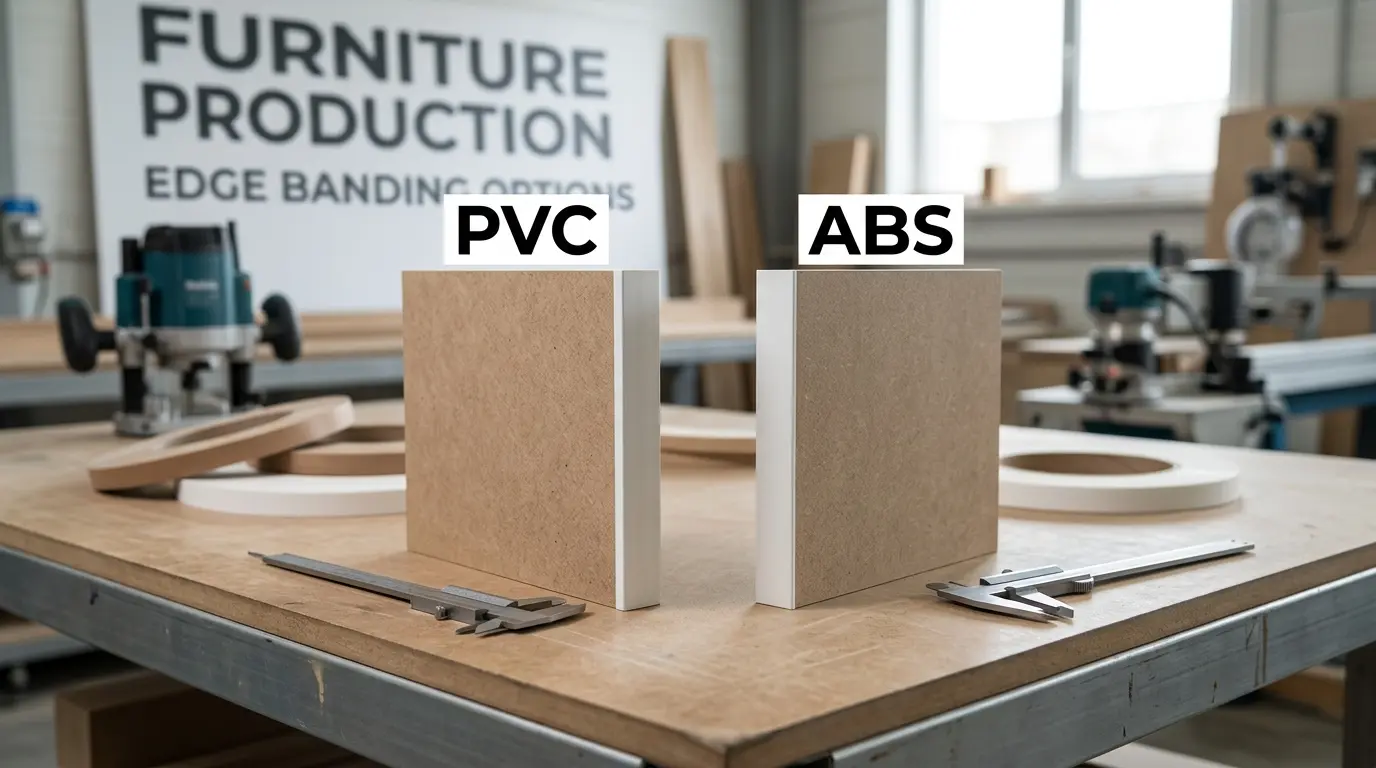
PVC and ABS edge banding are both widely used in cabinet and panel furniture manufacturing. Both can perform well when they match the product, the finish standard, and the way the line is actually run. The real question is not which material wins in general. It is which one gives your factory the better balance of appearance, durability, workflow stability, and cost.
Start With The Product Tier, Not The Roll Price
Too many material decisions start with the edge roll price and stop there. That usually leads to the wrong comparison.
The better starting point is the finished product requirement:
- Whether The Edge Will Be Highly Visible Or Mostly Hidden After Assembly
- Whether The Product Is Sold On Price, On Finish Quality, Or On A Mix Of Both
- Whether The Part Will See Frequent Handling, Cleaning, Or Daily Contact
- Whether The Factory Needs One Broadly Versatile Material Or A More Deliberate Split By Product Tier
- Whether The Current Edge Banding Process Can Hold A Clean Result Consistently Shift After Shift
Once those conditions are clear, PVC and ABS stop looking interchangeable. One often fits a broad, cost-conscious production model better. The other is often chosen when exposed-edge appearance, material positioning, or a more refined finish standard matters more.
What PVC Edge Banding Is Usually Chosen For
PVC is commonly selected because it works well as a general-purpose edge material across many furniture categories. In cabinet, wardrobe, office, and commercial panel production, it is often the practical choice when the factory needs reliable day-to-day performance without turning every finished edge into a premium-cost decision.
In workflow terms, PVC is often chosen for:
- Balanced Cost Control Across Medium- And High-Volume Production
- Dependable Performance On A Wide Range Of Standard Panel Components
- Exposed Or Semi-Exposed Parts That Still Need A Finished, Durable Look
- Product Lines Where Visual Quality Matters But Premium Material Positioning Is Not The Main Selling Point
- Factories That Need A Versatile Material Across Mixed Orders
That does not make PVC a low-grade option. It means PVC is often the material that helps factories keep finish quality commercially strong while holding material spending at a workable level.
The tradeoff is that PVC is not automatically the best answer when the product line is trying to signal a more elevated finish standard or when the buyer is deliberately moving away from PVC for internal policy or market-positioning reasons. A material that is broadly practical is not always the one that best supports a more selective product strategy.
What ABS Edge Banding Is Usually Chosen For
ABS is often chosen when the edge material decision is tied more closely to visible furniture quality, a cleaner product specification, or a chlorine-free material preference. In many factories, ABS enters the conversation when the product is no longer judged only by whether the edge is covered, but by how refined and deliberate the finished part looks.
ABS is commonly used for:
- Visible Furniture Components With Higher Finish Expectations
- Product Lines Where Material Positioning Matters More Than Lowest Roll Cost
- Exposed Shelves, End Panels, Doors, And Other Customer-Facing Parts
- Factories Trying To Differentiate More Clearly Between Standard And Upgraded Product Tiers
- Buyers Who Prefer A Chlorine-Free Edge Material For Internal Or Market Reasons
This does not mean ABS is universally better. It means ABS is often selected when the business is willing to spend more to support a cleaner specification or a more premium-facing result.
The main tradeoff is usually cost. If the product is highly price-sensitive, lightly stressed, or mostly hidden after assembly, ABS may not create enough real value to justify replacing PVC across the entire line.
Side-By-Side Decision Table
| Decision Factor | PVC Edge Banding | ABS Edge Banding |
|---|---|---|
| Typical Production Fit | Broad, general-purpose furniture and cabinet production | More selective use on visible or higher-spec product lines |
| Material Cost Pressure | Often chosen when cost control matters strongly | Often chosen when the factory accepts higher material spend |
| Finish Positioning | Solid commercial finish for routine daily output | Cleaner, more deliberate specification on exposed parts |
| Product Strategy | Good fit when one material must cover many standard jobs | Good fit when the catalog is split by standard and upgraded tiers |
| Material Preference | Common mainstream choice in furniture production | Often preferred when chlorine-free material selection matters |
| Process Expectation | Still requires strong setup and trimming control | Also requires strong setup, with finish defects often judged more critically |
| Best Business Logic | Keep output dependable and cost-efficient across mixed work | Spend more where visible edge quality or specification supports it |
The table matters because the decision is usually commercial and operational at the same time. A factory is not only buying an edge material. It is deciding where added material cost will improve product fit enough to matter.
How The Choice Changes The Edge Banding Workflow
Neither PVC nor ABS fixes a weak process. If incoming panel edges are rough, slightly inconsistent, or poorly prepared, both materials can still leave the factory carrying visible variation into assembly.
That is why factories comparing dedicated edgebanders should judge the material choice together with edge preparation, glue application, trimming stability, polishing quality, and corner finishing discipline.
In practice, the workflow usually has to protect:
- Panel Edge Quality Before The Material Is Applied
- Stable Adhesive Application Across The Shift
- Controlled Trimming And Polishing On Visible Parts
- Consistent Handling Of Higher-Visibility Components After Edge Banding
- Clear Sorting Between Standard And Premium Product Tiers
This is where the real difference often appears. PVC-heavy lines usually want a material that runs broadly and economically across many routine parts. ABS-heavy lines are more often judged on how refined the finished edge looks on exposed components. In other words, the material may change, but the process discipline still decides whether the result looks intentional or improvised.
When PVC Usually Fits Better
PVC often makes more sense when:
- Most Output Is Standard Cabinet, Wardrobe, Or Office Furniture Work.
- Material Cost Is A Major Planning Variable Across Large Volumes.
- The Factory Needs One Practical Material Across A Broad Range Of SKUs.
- The Product Needs Dependable Commercial Finish Quality Rather Than A More Deliberate Premium Specification.
- The Business Gains More From Cost-Stable Repeatability Than From Upgrading The Material Story.
In these situations, PVC often earns its place because it helps the factory keep the edge package practical without giving up a finished, marketable result.
When ABS Usually Fits Better
ABS often makes more sense when:
- The Product Line Includes More Visible, Customer-Facing Parts.
- The Brand Is Trying To Separate Premium And Standard Furniture More Clearly.
- A Chlorine-Free Material Preference Matters To Internal Policy Or Customer Expectations.
- The Added Material Spend Can Be Supported By The Selling Price Of The Product.
- The Factory Is Willing To Hold Tighter Process Control On Appearance-Sensitive Work.
In those situations, ABS is often less about replacing PVC everywhere and more about upgrading the parts where the specification actually changes how the product is perceived.
A Split Strategy Often Works Better Than A Full Conversion
Many furniture manufacturers do not need one answer across the entire catalog. A split strategy is often more practical.
PVC may fit better on routine cabinet parts, cost-sensitive office furniture, interior components, and broad-volume panel work where dependable output and cost control drive the decision. ABS may fit better on exposed shelves, designer-facing wardrobes, retail fixtures, premium cabinet exteriors, and other components where the finished edge helps define the product tier.
That approach usually creates a better return than a blanket change. Instead of paying more for every panel, the factory can spend more where the customer is most likely to see, compare, and value the difference.
Practical Summary
Choose PVC edge banding when the factory needs a versatile, cost-controlled material that can support dependable furniture production across a wide mix of everyday parts. Choose ABS edge banding when the edge decision is tied more directly to exposed-part appearance, a more selective product specification, or a chlorine-free material preference that the business actually values.
For many manufacturers, the strongest answer is not choosing one material as universally better. It is matching PVC or ABS to the product tier, the finish expectation, and the real discipline of the edge banding process. The better fit is the one that reduces rework, supports the way the product is sold, and makes daily production easier to control rather than harder to explain.