Most factories do not lose money because one machine is slightly slower on paper. They lose it because operators keep rechecking dimensions, setups interrupt the shift, downstream teams correct upstream variation, and growth depends too heavily on a few experienced people. That is why industrial CNC equipment is worth the investment when it improves the behavior of the whole workflow, not just the cycle time of one operation.
Across the broader Pandaxis machinery catalog, the strongest CNC buying cases usually come from factories that need more repeatable output, fewer manual handoffs, and cleaner production scaling. The real question is not whether CNC is advanced. It is whether CNC removes a repeated production cost that manual or semi-manual methods keep pushing downstream.
The Investment Case Starts With A Repeated Production Problem
Industrial CNC equipment usually earns its place when the same production friction appears again and again. If the problem is occasional, the investment case is weaker. If the problem is built into the daily workflow, CNC often becomes much easier to justify.
Common signals include:
- Repeated Parts Still Require Too Much Measuring, Positioning, Or Checking
- Downstream Operations Keep Correcting Variation From Earlier Steps
- Output Changes Too Much From One Operator Or Shift To Another
- Setup Time Is Breaking The Rhythm Of Batch Production
- Material Loss Is Being Driven By Re-Cuts Rather Than By Normal Yield Limits
- The Factory Wants More Capacity But Cannot Scale Manual Precision At The Same Rate
This matters because capital equipment should solve a pattern, not a one-week emergency. If a factory is buying CNC only because one job is unusually demanding, the investment can be hard to defend. If the factory is buying CNC because the same bottleneck keeps affecting throughput, fit-up, finish quality, or labor efficiency, the case becomes much stronger.
What CNC Actually Changes In The Workflow
The word “automation” can make CNC sound like a speed upgrade alone. In practice, CNC changes something more important: the reference system behind production.
Instead of relying on repeated manual layout, operator memory, and constant repositioning, CNC equipment uses programmed logic to keep cutting, drilling, routing, profiling, or machining more consistent from part to part. That shift affects several parts of the workflow at once:
- Part Positioning Becomes More Repeatable
- Similar Jobs Can Be Processed With Less Setup Doubt
- Output Becomes Easier To Standardize Across Shifts
- Downstream Processes Receive Parts With Fewer Preventable Variations
- Production Planning Depends Less On Manual Workarounds
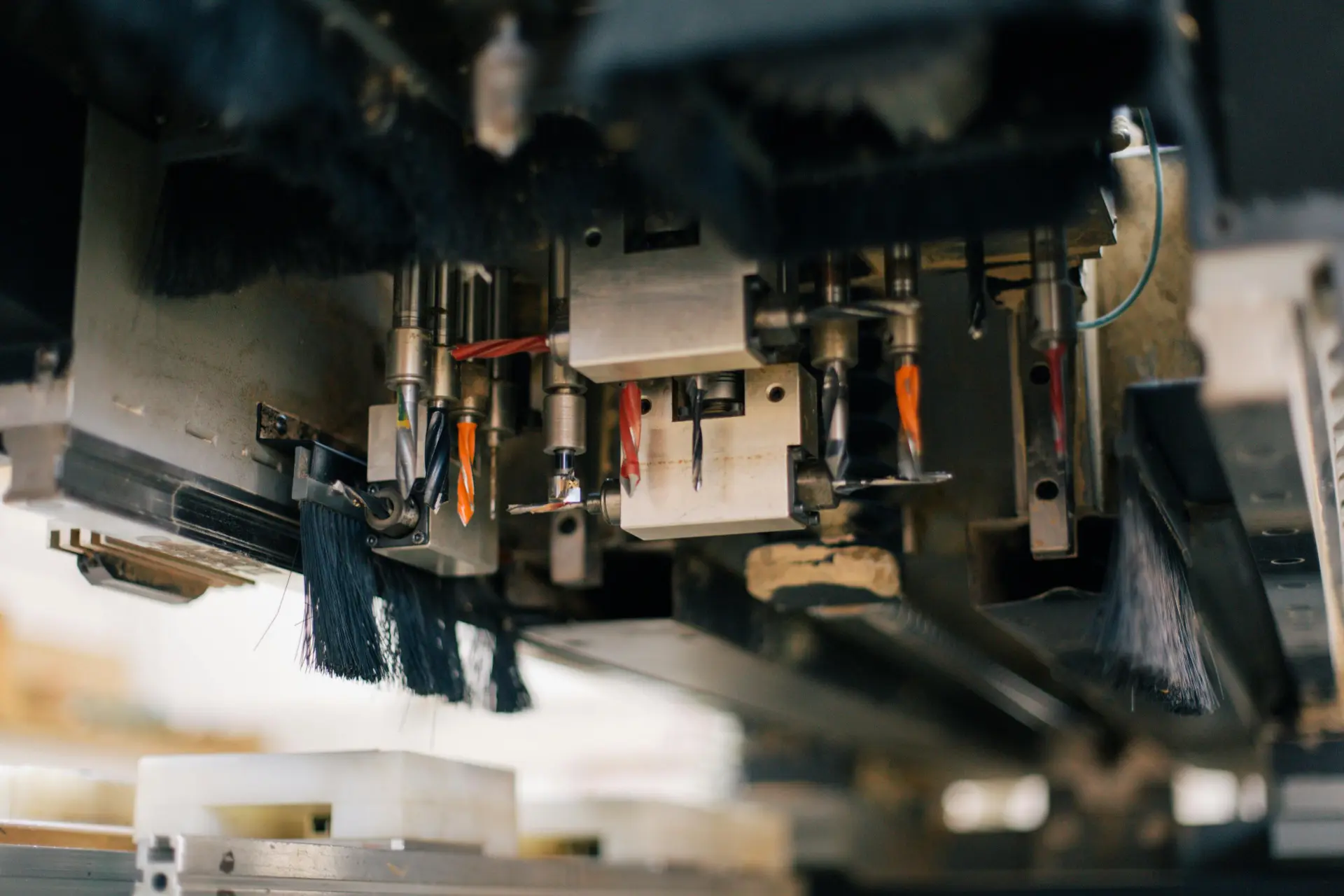
For example, in workflows built around CNC nesting machines, cutting, routing, and drilling can often be coordinated around one repeatable process reference instead of being split across several separate manual stages. The same investment logic also applies to CNC beam saws in structured panel sizing, CNC drilling in hardware-hole preparation, and stone CNC centers where profile consistency matters to finishing and installation.
That is the real gain. CNC does not simply make movement automatic. It makes production more controllable.
The Main Return Areas At A Glance
| Return Driver | What CNC Improves | Why It Matters In Production |
|---|---|---|
| Repeatability | More consistent dimensions, hole positions, profiles, or machining paths | Downstream teams spend less time correcting avoidable variation |
| Throughput Stability | More regular output across the shift | Scheduling, batching, and line balance become easier to manage |
| Setup Efficiency | Fewer repeated manual adjustments on similar jobs | More useful production time between batches |
| Labor Leverage | Less dependence on repeated manual technique | Factories can standardize output more effectively across operators |
| Material Control | Fewer remakes caused by avoidable processing errors | Waste pressure drops and usable yield improves |
| Process Integration | Better coordination of multiple operations around one reference | Handoffs become cleaner and rechecking drops |
| Scalable Capacity | More production growth without adding the same level of manual complexity | Expansion becomes easier to plan operationally |
The key point is that CNC value is often cumulative. A factory may justify the purchase on one bottleneck, but the real return usually appears across inspection, assembly, edge quality, scheduling, and daily production consistency.
When Payback Is Usually Strongest
Not every production environment gets the same return from CNC equipment. Payback is usually strongest when the factory is already working with repeated logic, tighter tolerances, or several downstream steps that depend on upstream consistency.
| Production Condition | Why CNC Often Pays Back Faster |
|---|---|
| Repeated Panel Or Cabinet Components | Programmed processing removes variation that becomes expensive across large batches |
| Multiple Operations On The Same Part | One stable reference reduces error accumulation between stages |
| Tight Assembly Or Finish Requirements | Small upstream errors create larger downstream labor costs |
| Growing Volume Across Longer Shifts | Standardization matters more when more parts and more operators are involved |
| High Rework Pressure | Preventing avoidable remakes improves both labor efficiency and material use |
| Skill-Dependent Manual Workflows | CNC helps reduce how much output quality depends on one operator’s personal method |
In practical terms, a factory making repeated furniture panels, hardware-ready carcass parts, machined stone components, or other precision-dependent production parts often sees the clearest return because the same accuracy requirement repeats every day.
What Buyers Should Evaluate Before Investing
The best CNC purchase decisions are usually made at the workflow level, not by comparing feature lists in isolation. Buyers should test whether the machine will improve the full process around it.
Key evaluation questions include:
- Is The Real Constraint In Machining, Or Is It In Staging, Sorting, Material Handling, Or Job Preparation?
- Will More Accurate And Repeatable Output Reduce Work In The Next Production Stage?
- Is The Product Mix Repeated Enough To Benefit From Programmed Consistency?
- Can The Factory Support The Machine With Good Tooling Discipline, Maintenance, And Job Data?
- Will The New Equipment Replace Recurring Manual Corrections, Or Only Add Another Step?
- Is Management Prepared To Adjust The Workflow Around The Machine Instead Of Treating It As A Standalone Fix?
These questions often matter more than individual headline specifications. A powerful CNC machine can still disappoint if the real bottleneck sits in labeling, batching, infeed organization, or downstream handling.
Expensive CNC Equipment Is Not Automatically A Good Investment
Industrial buyers should be careful not to confuse technical capability with financial fit. CNC equipment does not create value just because it is more advanced than a manual method.
The return can be weaker when:
- Production Volume Is Too Low Or Too Irregular To Benefit From Programmed Repetition
- Job Variety Is So Extreme That Programming Burden Outruns Process Gains
- The Factory Has Weak Discipline Around Tooling, Maintenance, Or Material Staging
- Downstream Chaos, Not Machining Accuracy, Is The Real Cause Of Delay
- Management Expects The Machine To Correct Planning Problems By Itself
That is an important tradeoff. CNC equipment is strongest when it supports a process that is ready to become more standardized. It is less effective when the surrounding workflow remains disorganized.
Practical Summary
Industrial CNC equipment is worth the investment when it removes a repeated production cost, not when it simply looks more advanced on a plant tour. The strongest returns usually come from better repeatability, steadier throughput, fewer manual corrections, cleaner process integration, and a more scalable production model.
That does not mean every factory needs the same kind of CNC solution. In some cases, the right step is a nesting cell. In others, it may be a CNC beam saw, a drilling-centered process, or a stone machining center that protects profile and fit consistency. The important point is the same in every case: the equipment should solve a measurable workflow problem that keeps showing up in labor, rework, material loss, or line stability. When that fit is real, CNC stops being a capital expense that needs to be defended and becomes a production tool that changes how the factory performs.