In woodworking production, sanding often looks simple until it becomes the reason coating quality slips, veneered panels get rejected, or assembly teams start sorting parts by surface condition. A panel or solid-wood component may already be cut accurately, but if thickness is inconsistent or the scratch pattern is unstable, the problem carries forward into finishing, inspection, and rework.
That is why wide belt sanders should be evaluated as process-control machines, not just sanding machines. Different wide belt configurations suit different production goals, from basic stock removal and thickness calibration to finer surface preparation before coating or final assembly. The right fit depends on material mix, finish expectations, daily output, and how sanding supports the rest of the line.
What a Wide Belt Sander Is Really Meant to Do
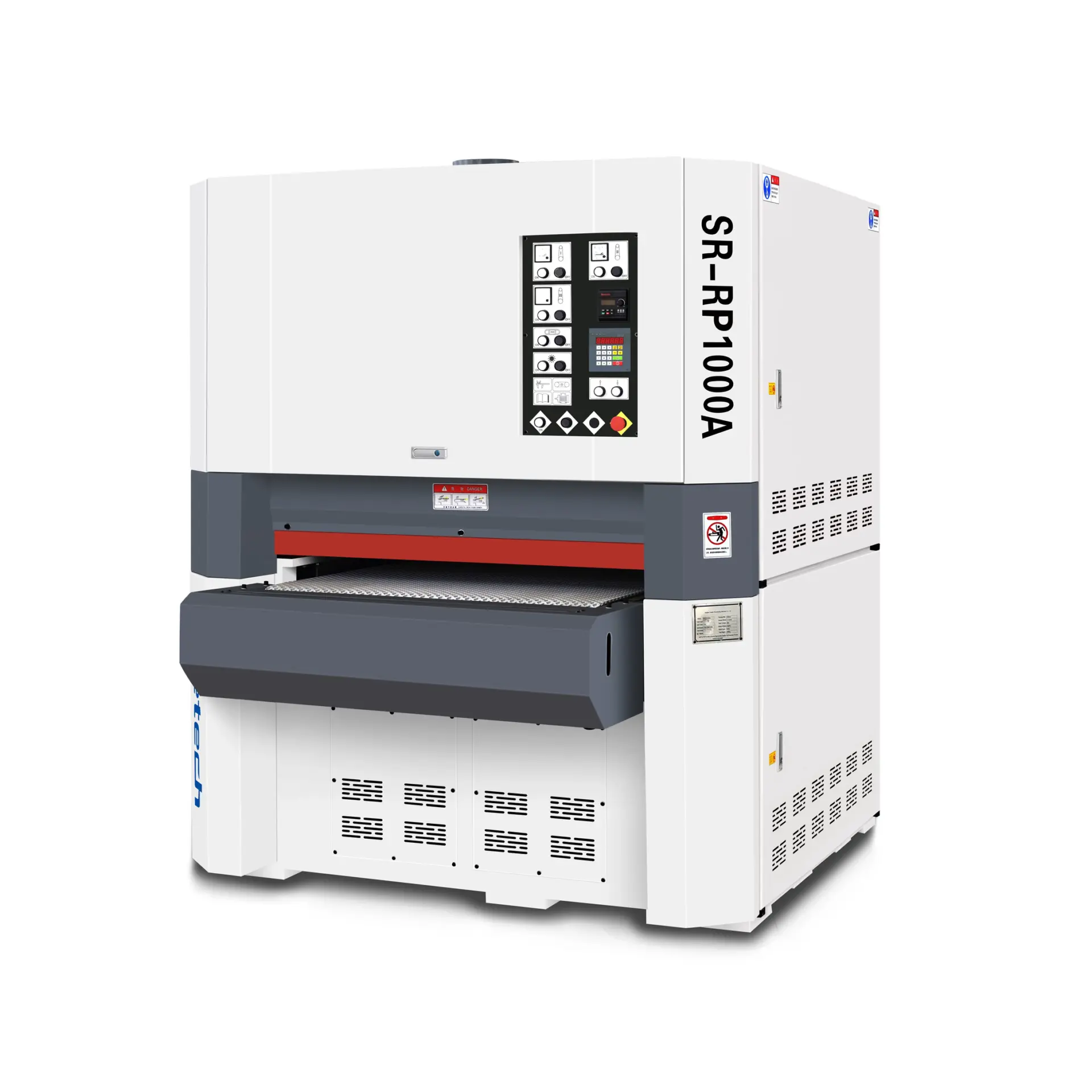
A wide belt sander is commonly used to calibrate thickness, flatten surfaces, and prepare parts for downstream finishing. In practical factory terms, that usually means helping produce a more consistent surface condition on solid wood, veneered panels, plywood, MDF-based components, and other flat workpieces that need controlled sanding before the next process step.
For factories evaluating wide belt sanders, the real question is rarely just whether the machine can remove material. The better question is what kind of sanding problem the shop is trying to solve. In some cases, the priority is faster calibration. In others, it is more even finish quality, fewer coating defects, or less hand sanding after machine processing.
That distinction matters because a sander that is well suited to stock removal is not automatically the best choice for fine surface preparation. The machine has to match the actual production objective.
Main Types of Wide Belt Sanders
The most practical way to compare wide belt sanders is by the kind of work they are expected to handle and how much sanding must be completed in one pass.
| Type | Common Production Fit | Main Strength | Main Tradeoff |
|---|---|---|---|
| Single-Head Wide Belt Sander | Basic calibration, smaller shops, or workflows where parts can make more than one pass | Straightforward thickness control and stock removal | Fine finish quality often depends on additional passes or later sanding steps |
| Double-Head Wide Belt Sander | Shops that need calibration and improved surface preparation in a more continuous flow | Balances material removal and finish improvement in one process stage | Still needs the right abrasive sequence and setup discipline to deliver stable results |
| Multi-Head Wide Belt Sander | Higher-volume lines with tighter finish expectations and less tolerance for manual rework | Supports a more controlled sanding sequence and better repeatability across batches | Usually makes the most sense when output and finish standards are already demanding |
| Finish-Focused Wide Belt Setup | Veneered panels, painted-surface preparation, or parts where surface quality matters more than aggressive stock removal | Better suited to creating a more uniform sanding pattern before coating or assembly | Less useful if the main problem is large thickness variation or heavy calibration |
These categories are not about one machine being universally better than another. They reflect different workflow priorities. A shop struggling with basic thickness consistency usually evaluates sanding differently from a factory trying to reduce visible finish defects on customer-facing panels.
Where Wide Belt Sanders Are Commonly Used
Wide belt sanders are commonly used in several different production contexts, but the value they create changes with the material and the stage of the workflow.
| Application | How the Machine Helps | What Buyers Should Watch |
|---|---|---|
| Solid Wood Calibration | Helps flatten parts and bring surfaces closer to a more consistent condition before assembly or finishing | Material variation, grain direction, and stock removal expectations affect setup and abrasive choice |
| Veneered Panel Preparation | Helps create a more controlled sanding pattern before later finishing steps | Overly aggressive sanding can be risky where the surface layer leaves little margin for error |
| MDF, Plywood, and Engineered Panels | Supports more repeatable panel preparation before coating, laminating, or assembly | Surface quality requirements vary depending on whether the part is structural, visible, or finish-ready |
| Painted or Coated Surface Preparation | Can be used in sanding sequences that aim for a more even intermediate surface condition | Coating system, grit progression, and process control matter as much as the machine itself |
| High-Volume Furniture and Cabinet Components | Reduces dependence on manual sanding and helps stabilize throughput | The machine only delivers full value when upstream sizing and downstream finishing are also well organized |
The main point is that the machine should be judged by what it improves in the workflow. Faster sanding matters, but flatter parts, more stable finish quality, and less downstream correction usually matter more.
What Actually Changes the Sanding Result
Many buyers focus first on headline machine size or the number of sanding heads. Those details matter, but the more useful decision often comes from understanding what actually changes the result on the part.
| Decision Area | Why It Matters in Production |
|---|---|
| Calibration Capacity | Determines how effectively the machine can help manage thickness variation and flatter surfaces |
| Finish-Oriented Sanding Sequence | Affects scratch consistency and how ready the part is for coating or final visual inspection |
| Head Configuration | Influences whether the machine is better suited to stock removal, surface refinement, or a combination of both |
| Material Handling Stability | Helps keep parts moving through the machine more consistently, which supports repeatable results |
| Abrasive Progression | Often determines whether the line produces a controlled surface or simply moves defects from one pass to the next |
| Setup Repeatability | Reduces operator-to-operator variation and makes batch quality easier to maintain |
In real production, the better sanding result usually comes from the combination of machine type, abrasive sequence, and setup discipline rather than from one isolated feature. A stronger machine does not automatically solve a weak sanding process.
Wide Belt Sanders Vs. Other Sanding Approaches
Wide belt sanders are often compared with other finishing methods. That comparison matters because some shops buy a wide belt sander when the real problem sits somewhere else, while others keep relying on slower manual work long after the sanding stage has become the bottleneck.
| Process | Best Fit | Main Advantage | Main Limitation |
|---|---|---|---|
| Wide Belt Sander | Flat workpieces that need more repeatable calibration or surface preparation | Better throughput and more stable results on repeated production work | Less suited to profiled, curved, or highly irregular shapes |
| Manual Sanding | Touch-up work, low-volume custom jobs, or irregular parts | Flexible and useful for correction work | Labor-heavy and difficult to keep fully consistent across batches |
| Orbital or Handheld Machine Sanding | Smaller parts, localized finishing, or flexible low-volume workflows | Practical for spot work and varied geometry | Usually slower and less repeatable for large volumes of flat parts |
| Planing or Stock-Removal Preparation | Rougher thickness reduction earlier in the material-prep process | Effective where heavier material reduction is needed before sanding | Does not replace the surface-preparation role of a wide belt sanding stage |
| Brush or Profile Sanding | Edges, contours, or shaped components | Better fit for non-flat surfaces | Not a substitute when the main need is flat-panel calibration or surface consistency |
This is where the buying decision often becomes clearer. If the production challenge is flat parts, repeated output, and stable finish preparation, a wide belt sander is commonly the better fit. If the work is irregular, low-volume, or dominated by contour sanding, another process may deserve priority first.
Buying Tips That Matter More Than Headline Claims
The strongest buying decisions usually come from workflow analysis rather than from chasing the biggest machine or the longest feature list. Before buying, it helps to evaluate the factors below against the way the factory actually works.
| Buying Factor | What to Assess | Why It Matters |
|---|---|---|
| Material Mix | Whether the line mainly runs solid wood, veneered panels, engineered boards, or a mix | Different materials place different demands on calibration, sanding aggression, and finish control |
| Main Goal | Whether the priority is stock removal, thickness consistency, finer finish preparation, or all three | Prevents buying a machine optimized for the wrong task |
| Daily Output | How many parts need to move through sanding without creating a queue | Helps show whether a more capable sanding sequence will actually relieve a production bottleneck |
| Finish Standard | How visible the final surface is to the customer or downstream QC team | Higher finish expectations usually require tighter sanding control, not just faster sanding |
| Downstream Process Sensitivity | Whether coating, laminating, or assembly quality is already being affected by sanding variation | Reveals whether sanding is really a surface-preparation issue rather than only a throughput issue |
| Changeover Pattern | Whether the shop runs repeated batches or frequent product changes | Determines how much value comes from a more structured setup |
| Labor Burden | How much manual sanding or corrective sanding still happens after the machine stage | Hidden labor often makes a bigger business case than machine speed alone |
| Process Stability | How consistently parts arrive from upstream operations and leave toward finishing | A sanding upgrade works best when the rest of the workflow can support it |
| Maintenance Discipline | Whether the factory can support routine abrasive management, cleaning, and calibration checks | Even a good machine will drift in performance if the sanding process is not maintained well |
In many cases, buyers get more clarity by asking two simple questions. Where is the real cost today: surface inconsistency or sanding labor? And what does the factory need tomorrow: better calibration, a cleaner finish, or more throughput?
Signs It Is Time to Upgrade
The case for a wide belt sander, or for a more capable sanding configuration, becomes stronger when several conditions are already visible in the factory.
- Hand Sanding Still Consumes Too Much Time After Machine Processing.
- Parts Reach Coating or Assembly With Inconsistent Surface Condition.
- Thickness Variation Is Causing Sorting, Inspection Delays, or Rework.
- Surface Defects Keep Reappearing Even When Upstream Cutting Is Stable.
- Output Targets Are Being Limited by the Sanding Stage Rather Than by Cutting or Assembly.
- Finish Quality Depends Too Heavily on Operator Touch-Up Instead of a Controlled Process.
When those signs are present, the machine is no longer just a capital purchase. It becomes part of a broader effort to make surface preparation more predictable and less labor-dependent.
When a Simpler Setup May Still Be Enough
Not every shop needs a more complex sanding line. A simpler wide belt setup may still be the better fit when daily output is moderate, finish demands are manageable, and parts can reasonably move through more than one sanding pass without disrupting the rest of the workflow.
That is often true in smaller or mixed-production environments where flexibility matters more than maximum one-pass efficiency. In those cases, the goal is usually to improve consistency and reduce manual work without adding unnecessary process complexity.
The better decision comes from matching the machine to the actual sanding problem. Buying too little machine can leave the bottleneck untouched, but buying too much machine can also add cost without changing the workflow in a meaningful way.
Practical Summary
Wide belt sanders are best understood as surface-control machines for flat-part production. Their value is not limited to material removal. They help support flatter parts, more consistent thickness, more stable finish preparation, and less dependence on manual sanding when the workflow is built around repeated output.
The right type depends on what the shop is trying to improve. A simpler machine may be enough when the main need is basic calibration and moderate output. A more capable configuration becomes easier to justify when finish quality, labor reduction, or throughput stability already matter every day. The stronger buying decision comes from identifying whether the sanding stage is supposed to remove stock, create a cleaner finish, or do both with less variation.