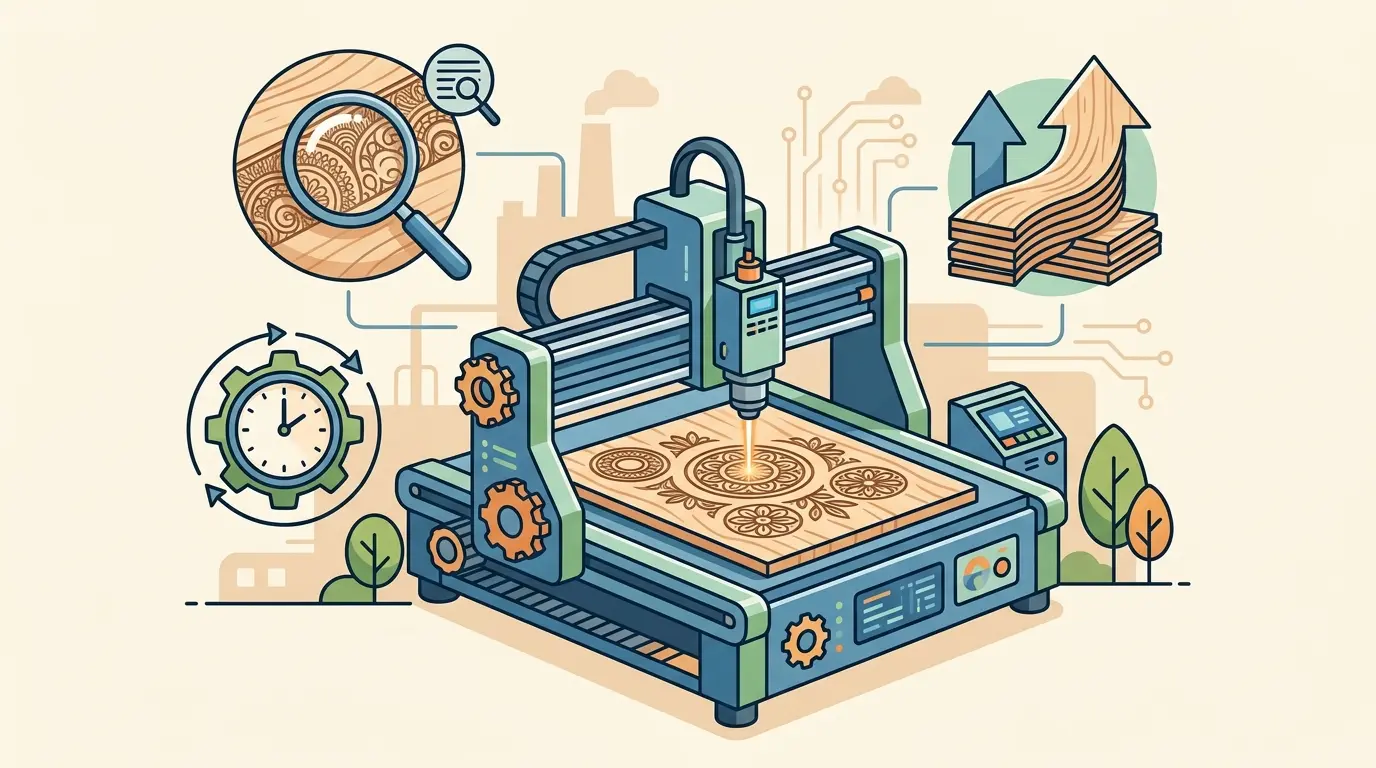
Custom manufacturing rarely breaks down because one sample part looks bad. It breaks down when the shop has to move from a short run of branded plywood boxes to custom decorative panels and then to a repeat OEM order with different artwork, all without losing surface quality or burning time on setup corrections. A wood engraving machine for this kind of work has to do more than create detail. It has to support a workflow where materials, designs, and order sizes change constantly.
For buyers evaluating laser cutters and engravers for wood and similar non-metallic materials, the better question is not whether the machine can engrave wood at all. The better question is whether it can stay stable when contrast, placement, cleanup, and changeovers all matter in the same production week.
Custom Manufacturing Changes What Good Performance Looks Like
In a high-mix factory, the engraving process is judged less by one impressive demo and more by how well it behaves under variation. A machine that looks productive on a single standard job can become expensive if operators keep stopping to adjust focus, clean visible residue, or recheck alignment after every material change.
| Custom Manufacturing Pattern | What Usually Matters Most | What Commonly Slows Production Down | What the Machine Needs To Do Well |
|---|---|---|---|
| Short-Run Custom Orders | Fast setup, repeatable artwork placement, predictable results on small batches | Frequent file changes, operator hesitation, wasted blanks during setup | Support quick job recall and stable engraving from the first acceptable part |
| OEM And Private-Label Work | Consistent branding across repeat orders | Slight drift between batches, inconsistent tone on different material lots | Hold repeatability across separate production runs |
| Decorative Customer-Facing Panels | Even visual quality across the part surface | Smoke marks, uneven contrast, visible inconsistency from one area to another | Maintain stable engraving conditions across the usable work area |
| Mixed Cut-And-Engrave Products | Reliable sequencing between marking and contour cutting | Misalignment, small-part movement, cleanup delays after cutting | Keep the combined process controlled rather than operator-dependent |
That is why custom manufacturing buyers should judge machine fit through workflow pressure, not through generic feature claims. In this environment, consistency under change is usually more valuable than a headline performance point taken from an isolated sample.
Start With the Order Structure, Not the Spec Sheet
The same phrase, “wood engraving machine,” can describe very different buying situations. One factory may engrave customer names on pre-cut gift boxes. Another may run decorative wall panels in short batches. A third may add branded marks to wooden packaging for several private-label clients. Those jobs do not stress the process in the same way.
Before comparing equipment, it helps to answer a few practical questions:
- How Many Job Changes Happen in a Typical Shift?
- Are Most Parts Pre-Cut Blanks, Or Does the Workflow Also Need Contour Cutting?
- Are Engraved Faces Customer-Visible at Close Range?
- How Often Do Material Types Change Between Plywood, MDF, Veneered Boards, Or Solid Wood?
- Does the Business Need Short-Run Flexibility, Or Repeatability on Returning OEM Orders?
- Is the Real Bottleneck Setup Waste, Surface Rejects, Or Cycle Time?
These questions matter because custom manufacturing usually pays for flexibility, not just motion speed. If the queue changes several times per day, saved job logic, stable placement, residue control, and easy operator recovery from a changeover can have a larger impact on throughput than a faster-looking sample cycle.
Material Variation Creates More Engraving Risk Than Many Buyers Expect
Wood is not one production material. Solid wood, plywood, MDF, veneered panels, and coated decorative boards respond differently to heat, smoke, and airflow. In custom manufacturing, where shops may switch materials often, that variation can create quality drift faster than expected.
| Material Type | Common Production Behavior | Why It Matters in Custom Manufacturing |
|---|---|---|
| Solid Wood | Grain and density variation can change the visual result from part to part | Jobs may need tighter sampling and recipe control when the finish standard is high |
| Plywood | Veneer layers and glue lines can affect appearance and edge cleanliness | Repeatability becomes harder when customer orders move across different sheet lots |
| MDF | Surface response is often more uniform, but residue control becomes more important | Cleanup and extraction discipline have a direct effect on visible-face quality |
| Veneered Or Coated Panels | Cosmetic standards are usually higher because the finished face is scrutinized closely | Minor staining, uneven tone, or process inconsistency can turn into reject risk quickly |
For custom work, the machine should not be judged on one generic sample alone. The better evaluation is whether the process stays manageable when the product mix includes several wood-based materials with different cosmetic expectations.
Where a Laser-Based Wood Engraving Workflow Fits Best
A laser-based wood engraving machine is commonly well suited to custom manufacturing when the order value depends on visual detail, non-contact processing, or frequent design changes. That usually includes workflows such as branded wooden packaging, decorative panels, signage, OEM presentation boxes, custom inserts, and other parts where surface graphics matter as much as the base material shape.
This type of workflow is often attractive when a factory needs:
- Fine Text, Logos, Or Decorative Patterns Without Contact Tooling
- Fast Artwork Changes Between Orders
- Consistent Branding Across Short Runs And Repeat Batches
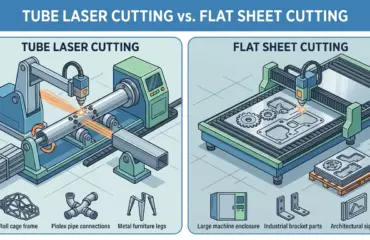
- Combined Engraving And Shape Cutting on Similar Non-Metallic Materials
- A Process That Reduces Manual Marking Or Secondary Decorative Steps
In these cases, the workflow gain usually comes from reduced tooling dependency and easier design turnover. That matters in custom manufacturing because margin is often protected by responsiveness, not only by long uninterrupted runs.
Where the Workflow Should Lean More Toward Routing Or Panel Processing
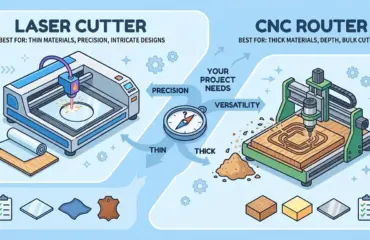
Not every wood-related job should be pushed into an engraving-first investment decision. If the plant mainly earns revenue from large-sheet breakdown, routed machining, drilling, grooves, pockets, or cabinet-part preparation, then engraving may be a secondary step rather than the core process.
If buyers are also comparing the role of CNC nesting machines in the line, the decision should come back to what actually drives production hours and sellable output.
| Production Need | Laser-Based Wood Engraving Workflow | CNC Nesting Or Mechanical Panel Workflow |
|---|---|---|
| Fine Branding And Decorative Surface Detail | Strong Fit | Usually Secondary |
| Fast Design Changes Across Custom Orders | Strong Fit | Application Dependent |
| Deep Material Removal Or Structural Machining | Limited | Strong Fit |
| Sheet Routing, Drilling, And Part Preparation | Limited | Strong Fit |
| Mixed Decorative Cut-And-Engrave Work | Strong Fit | Application Dependent |
| High-Volume Furniture Part Processing | Limited | Strong Fit |
This comparison matters because custom manufacturers often try to make one machine solve every production problem. In practice, engraving delivers the most value where design variation, visible detail, and non-contact processing matter. Mechanical panel processing carries more value where structural wood operations dominate the schedule.
The Features That Usually Protect Throughput in Custom Work
For custom manufacturing, the most useful machine features are usually the ones that reduce recovery time after a job change and keep acceptable parts moving. Buyers should think less about isolated feature names and more about the operational result each feature supports.
| Feature Area | Why It Matters in a High-Mix Workflow | Workflow Outcome |
|---|---|---|
| Working Area And Material Support | Different order types may involve small parts one hour and larger panels the next | Fewer awkward setups and more stable part presentation |
| Motion Stability And Positioning Consistency | Artwork alignment matters when every order has a different layout | Less setup waste and fewer misaligned repeat jobs |
| Focus Stability Across the Part | Larger decorative panels and varied stock flatness make consistency harder | More even engraving quality across the usable area |
| Airflow And Extraction Control | Visible residue quickly creates rework on customer-facing surfaces | Cleaner parts and less manual post-process cleanup |
| Job File Recall And Recipe Discipline | Operators may switch between customers, materials, and artwork repeatedly | Faster changeovers with fewer trial parts |
| Maintenance Accessibility | Wood-based engraving workflows put constant pressure on cleanliness | More predictable output and less drift between service intervals |
These areas are especially important in custom manufacturing because the hidden cost is rarely one catastrophic failure. It is the steady accumulation of short delays, rejected blanks, and operator corrections that quietly reduce daily output.
Buying Questions Before You Request Quotes
Before narrowing the shortlist, production teams should be able to answer these questions clearly:
- Which Orders Actually Consume the Most Machine Hours in a Month?
- Are Custom Jobs Usually Engraving Only, Or Do They Also Need Contour Cutting?
- How High Is the Cosmetic Standard on Customer-Facing Parts?
- How Often Do Operators Switch Material Families Within the Same Shift?
- Is the Business Losing More Time to Setup Waste Than to Pure Cycle Time?
- Would a Broader Mechanical Panel Workflow Still Carry Most of the Factory Load?
These questions improve buying accuracy because they force the team to define where the machine will create real operational value. In custom manufacturing, the correct machine is usually the one that makes job variation easier to manage without turning every order change into a process reset.
Practical Summary
The right wood engraving machine for custom manufacturing is usually the one that stays usable under variation. It should help the shop protect visible quality, reduce setup waste, manage frequent file changes, and maintain repeatability across different materials and order structures. That is a different standard from simply producing one attractive wood sample.
If your business depends on decorative detail, customer-specific graphics, private-label branding, or other high-mix non-metallic engraving work, a laser-based workflow is commonly well suited to the task. If the schedule is dominated by routing, drilling, panel breakdown, and structural machining, engraving may be a complementary process rather than the main investment priority. The strongest decision comes from matching the machine to the real order pattern, then judging every feature by the workflow problem it actually solves.